- What an internal gutter is
- Why they leak into the house
- What the rules ask for
- Signs yours is in trouble
- Repair, reline or convert
- What a conversion involves
- Keeping one out of trouble
- Frequently asked questions
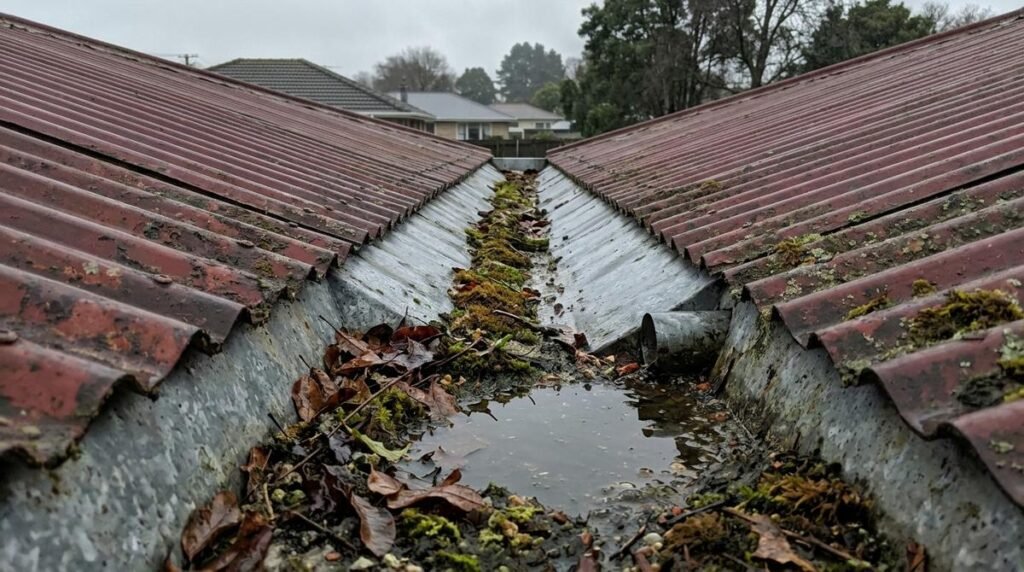
An internal gutter sits inside the line of the roof rather than along the edge of it. When an ordinary spouting blocks, it overflows over the side and down the wall. When an internal gutter blocks, the water has nowhere to go but up, over the back of the gutter, and into the building. That one difference is why they cause so much damage for so little warning.
What an Internal Gutter Is
Internal gutters, sometimes called box gutters or parapet gutters, run between two roof planes, behind a parapet wall, or along a junction where the roof meets a wall. They are common on older New Zealand homes, on villas and bungalows with complicated rooflines, and on anything with a flat-roofed addition or a parapet at the front.
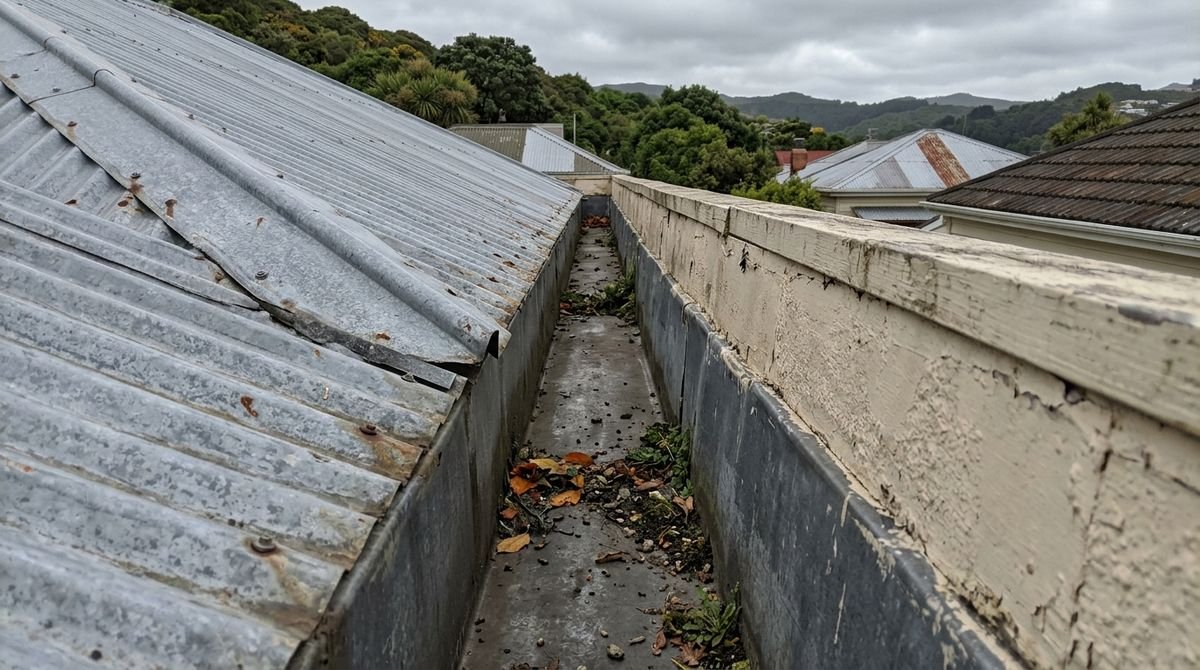
They exist because the architecture needs them. A roof that steps, or hides its edges behind a wall, has to drain somewhere, and the gutter ends up inside the building envelope. Done properly, with enough size, enough fall and a working overflow, they last for years. Done marginally, they are the single most expensive leak on a house.
Why They Leak Into the House
Five causes account for most internal gutter failures, and only one of them is the gutter itself wearing out.
- A blockage with nowhere to overflow. Leaves, moss, a tennis ball or a bird nest at the outlet. The gutter fills, the water rises above the upstand at the back, and it goes into the ceiling.
- Not enough fall. Water that cannot run to the outlet sits in the gutter. Standing water finds every pinhole and seam, and in a Dunedin winter it freezes and expands.
- Undersized for the roof it drains. A gutter sized for an ordinary downpour fails in the sort of rain that now turns up regularly. The catchment it serves matters as much as its dimensions.
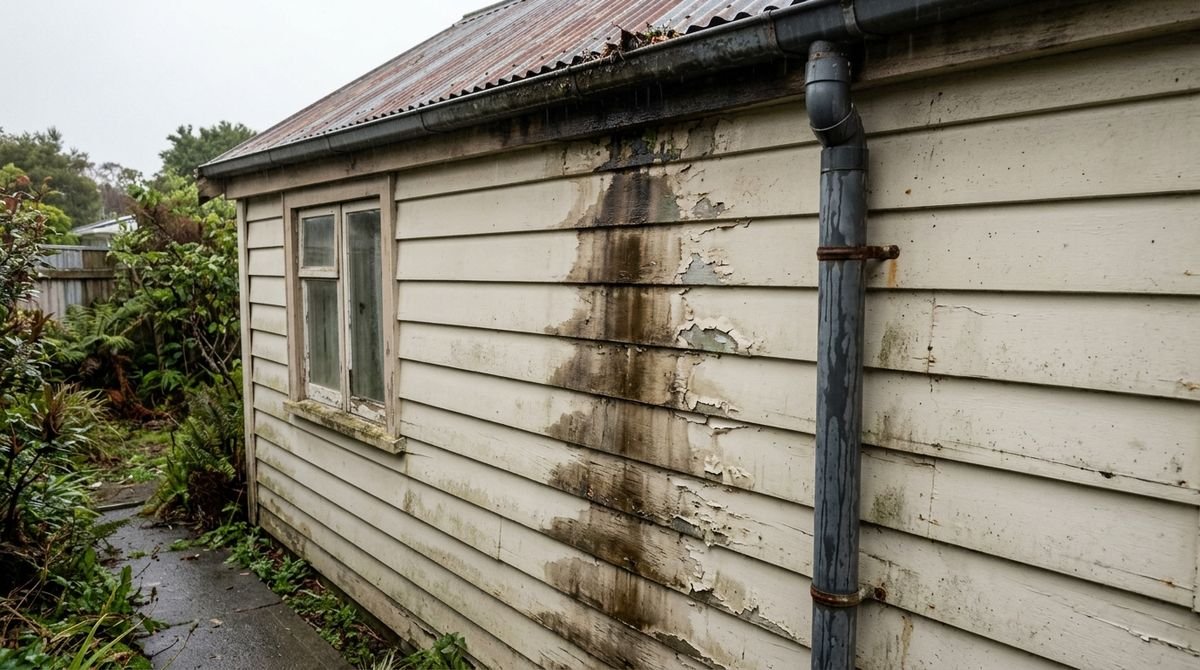
- A failed lining or joint. Old soldered joints crack, membranes harden and split at the corners, and rust starts where water sits longest.
- No overflow, or one that does not work. If the only exit is the downpipe, then a blocked downpipe means the ceiling is the overflow.
What the Rules Ask For
Internal gutters are treated carefully in the Building Code, because the consequence of failure is water inside the house rather than down the outside of it. In broad terms:
- The gutter has to be sized for the roof area it drains, under clause E1 for surface water, rather than simply built to a standard width.
- It needs a continuous lining, either a membrane such as butyl or EPDM, or welded sheet metal, with no cross joints partway along.
- It needs fall to the outlet. E2/AS1 sets a minimum for membrane-lined gutters, the metal roofing Code of Practice sets its own figures, and BRANZ recommends building in more than the minimum, because a structure settles over its life and the fall you build is not the fall you keep.
- It needs an overflow that discharges outside the building, set below the top of the gutter and sized against the downpipes, so that a blocked outlet shows itself on the outside wall instead of in the ceiling.
The practical version for a homeowner: if your internal gutter has no visible overflow outlet on the outside of the building, the first heavy rain after a blockage will find the inside of your house.
Signs Yours Is in Trouble
| Sign | What it usually means |
|---|---|
| Stain on the ceiling near an internal wall or parapet | Water coming over the back of the gutter |
| Paint bubbling at the top of a wall | Slow leak, often for longer than you think |
| Water pouring off the roof edge in heavy rain | The gutter is full and finding its own way out |
| Moss, leaves or grit visible in the gutter | Reduced capacity and a blockage waiting to happen |
| Rust streaks or dark staining along the gutter sole | The lining is at or near the end of its life |
| Water still sitting in it a day after rain | Not enough fall, or the outlet is partly blocked |
A leak from an internal gutter often shows up a long way from the gutter itself. Our guide to why roofs leak in older Dunedin homes covers how water travels before it drops.
Repair, Reline or Convert
There are three honest options, and which one suits depends on the gutter, not on what is cheapest today.
| Option | When it makes sense | What to expect |
|---|---|---|
| Repair | One failed joint, a split corner, a blocked outlet, otherwise sound | The cheapest fix, and fine if the rest of the gutter has life in it |
| Reline | The lining has had it but the size, fall and outlets are adequate | A new membrane or new metal lining in the existing gutter |
| Convert to external spouting | The gutter is undersized, has poor fall, or has leaked more than once | The permanent answer where the roof shape allows it |
Converting is not always possible. A parapet at the front of the house, a boundary wall, or two roof planes meeting in a valley may mean the gutter has to stay where it is. In that case the work is to make it behave: correct fall, a new continuous lining, a bigger outlet and a real overflow.
What a Conversion Involves
Where the roofline allows it, converting an internal gutter to external spouting means reworking the edge of the roof so the water runs out over the side of the building instead of inside it. In practice that usually means extending or rebuilding the roof edge, new fascia and external spouting, new flashings where the old gutter was, and sheets cut and refitted to suit the new edge.
It is roofing work rather than a plumbing job, and it is most economical as part of a reroof, when the roof is off anyway and the scaffolding is already up. Our reroofing page covers what a full replacement includes.
Keeping One Out of Trouble
- Clear it twice a year, and again after any storm that brings leaves down.
- Check the outlet and the overflow, not just the gutter. Outlets block first.
- Treat moss on the roof above it, because that is where most of the grit comes from.
- After heavy rain, look at the outside wall below the overflow. Water there means the outlet is partly blocked.
- Do not stand in it. Foot traffic damages linings, especially older membrane.
Moss is the main culprit in Dunedin. Our guide to removing roof moss is worth reading if the roof above your gutter is shaded.
Frequently Asked Questions
What is an internal gutter?
A gutter that sits inside the line of the roof rather than along its edge. It might run between two roof planes, behind a parapet wall, or where a roof meets a wall. Because it is inside the building envelope, an overflow goes into the house rather than over the side.
Why do internal gutters leak so often?
Usually not because the gutter has worn out. The common causes are a blocked outlet with no working overflow, not enough fall so water sits in it, a gutter undersized for the roof it drains, or a lining that has split at a corner or joint.
Can an internal gutter be converted to normal spouting?
Often, but not always. It depends on the roof shape. Where a parapet, a boundary or a valley between two roof planes created the gutter in the first place, it usually has to stay and be rebuilt properly instead.
Does an internal gutter need an overflow?
Yes. The overflow is what turns a blocked gutter into a stain on the outside wall instead of water in the ceiling. It has to discharge outside the building, sit below the top of the gutter, and be sized against the downpipes serving it.
How often should internal gutters be cleaned?
Twice a year as a minimum, and after any storm that drops leaves. Anything with trees nearby needs it more often. The outlet matters more than the length of the gutter, because that is what blocks.
Is an internal gutter leak covered by insurance?
That is between you and your insurer, and it often turns on whether the damage was sudden or the result of gradual failure and lack of maintenance. Keeping gutters clear and getting leaks looked at early helps on both counts.
Got a stain on the ceiling near a wall, or a gutter you cannot see from the ground? Send us a few photos and we will tell you whether it needs clearing, relining or converting.