- When a roof needs a membrane, not long-run steel
- Butynol: what it is and how it ages
- TPO: what it is and how it ages
- Butynol vs TPO, side by side
- What goes wrong on Dunedin flat roofs
- Repair or replace?
- Frequently asked questions
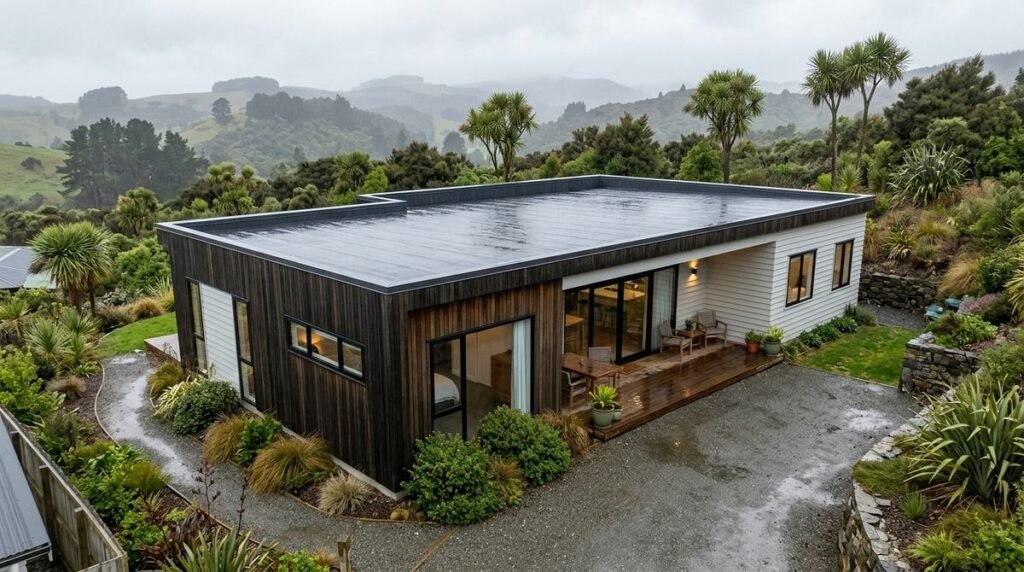
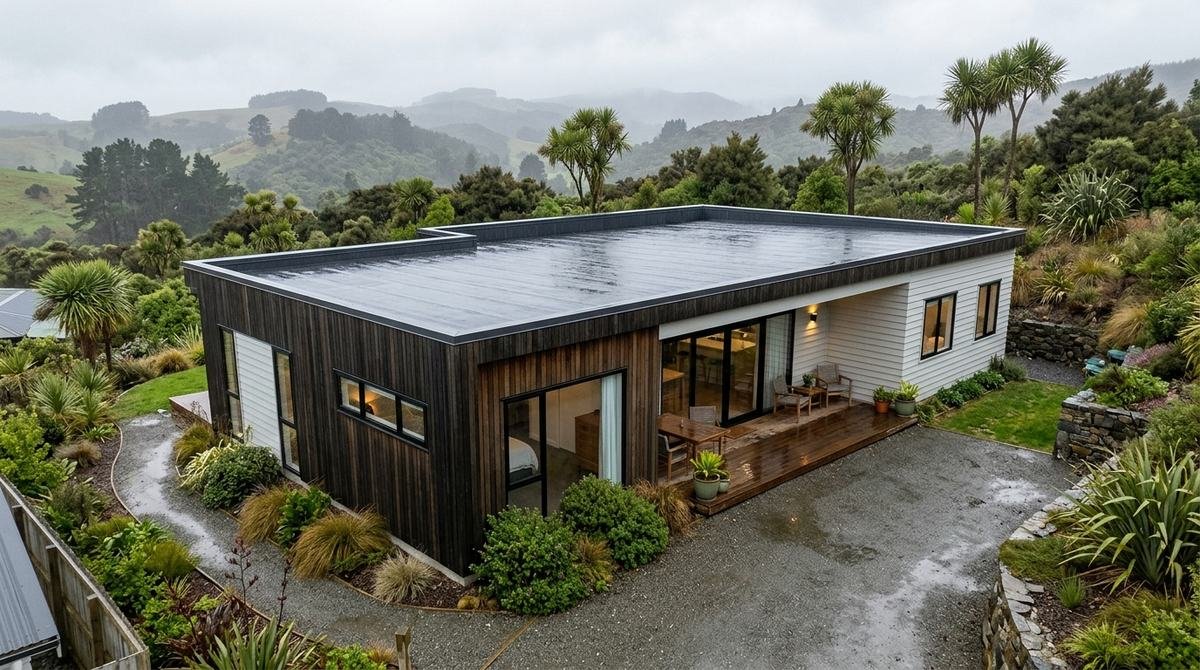
Butynol and TPO are both membranes used on roofs too flat for long-run steel. Butynol is a butyl rubber sheet, glued down with bonded seams. TPO is a plastic sheet with heat-welded seams. Both can last decades. Which one suits your roof comes down to the shape of it, how it will be used, and how it needs to be signed off.
When a Roof Needs a Membrane, Not Long-Run Steel
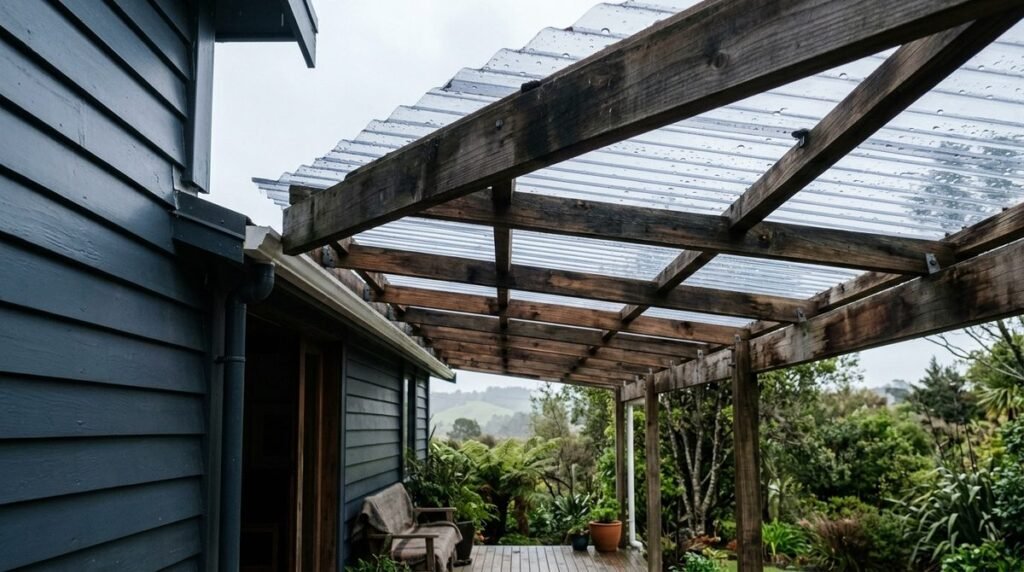
Steel roofing needs fall to work. Water has to run off before it finds a lap or a fixing. Corrugate needs a pitch of at least 8 degrees under E2/AS1 and trapezoidal profiles such as 5-rib need at least 3 degrees, which is why a flat roof, a deck over a living space, or a wide box gutter cannot be done in steel. That is where membrane comes in.
The Building Code treats these roofs carefully, because there is no margin for error when water sits still. E2/AS1, the Acceptable Solution for external moisture, covers butyl rubber and EPDM membranes at least 1 mm thick, and sets a minimum fall of 2 degrees (1 in 30) for a membrane roof and 1.5 degrees (1 in 40) for a deck. BRANZ recommends going steeper than the minimum, around 3 degrees, because a roof structure settles over its life and the fall you build is not always the fall you keep. Some councils ask for more again.
TPO sits outside E2/AS1. That does not make it non-compliant, it means it is used as an alternative solution, usually backed by a product appraisal and installed by applicators the manufacturer has trained. Your roofer should be able to tell you which path your job is taking before any consent goes in.
Not sure what pitch your roof is? Our guide to calculating roof pitch shows how to measure it with a level and a tape.
Butynol: What It Is and How It Ages
Butynol is a butyl rubber sheet, typically 1 mm or 1.5 mm thick, bonded to a prepared plywood substrate with adhesive. Seams are bonded too. It has been used on New Zealand decks, flat roofs and internal gutters for decades, which is the strongest thing you can say about any roofing material: there are plenty of old ones still working.
It is flexible, it takes foot traffic reasonably well, and it is forgiving around the awkward details that flat roofs are full of: upstands at walls, outlets, pipe penetrations and corners. It is also easy to patch. A puncture in a butynol roof is usually a small repair rather than a new roof.
What ages it: ultraviolet light, standing water, movement in the substrate underneath, and anything sharp. Failures tend to show up at the edges rather than in the middle of a sheet, where the membrane turns up a wall or meets an outlet, and around seams that have been stressed by movement.
TPO: What It Is and How It Ages
TPO stands for thermoplastic polyolefin. It is a plastic single-ply membrane, and the key difference from butynol is the seams: they are welded with hot air, so the join is a fusion of the two sheets rather than a bond between them. A welded seam is the part installers like, because it either passes a probe test on the day or it does not.
TPO sheets are usually light in colour, which keeps the surface cooler than a dark membrane, and they are made for long UV exposure. The material is common on commercial roofs here and overseas, and has moved onto houses as flat roofed and low-pitch designs have become more popular.
What ages it: the same enemies as any membrane, plus the quality of the welding. A badly welded seam is the usual failure point, which is why manufacturers run applicator training and why a product appraisal matters.
Butynol vs TPO, Side by Side
| Butynol (butyl rubber) | TPO | |
|---|---|---|
| Material | Synthetic rubber sheet | Thermoplastic single-ply sheet |
| Seams | Bonded with adhesive or tape | Heat-welded, testable on site |
| Typical colour | Black or dark grey | Usually light grey or white |
| Code pathway | Covered by E2/AS1 at 1 mm or thicker | Alternative solution, product appraisal |
| Foot traffic | Good, common on decks | Good, check the manufacturer’s detail for traffic |
| Repairs | Simple to patch | Welded patch, applicator usually needed |
| Common failure point | Edges, upstands and stressed seams | Poorly welded seams |
| Where it suits | Decks, small flat roofs, internal gutters | Larger flat roofs, modern low-pitch designs |
Neither is the right answer everywhere. A small deck over a bedroom with four upstands and a tricky outlet is butynol territory. A long, simple, low-pitch roof is where welded seams and a light surface earn their keep.
What Goes Wrong on Dunedin Flat Roofs
The membrane itself is rarely the first thing to fail. Four things cause most of the leaks we see on flat and low-pitch roofs around Dunedin.
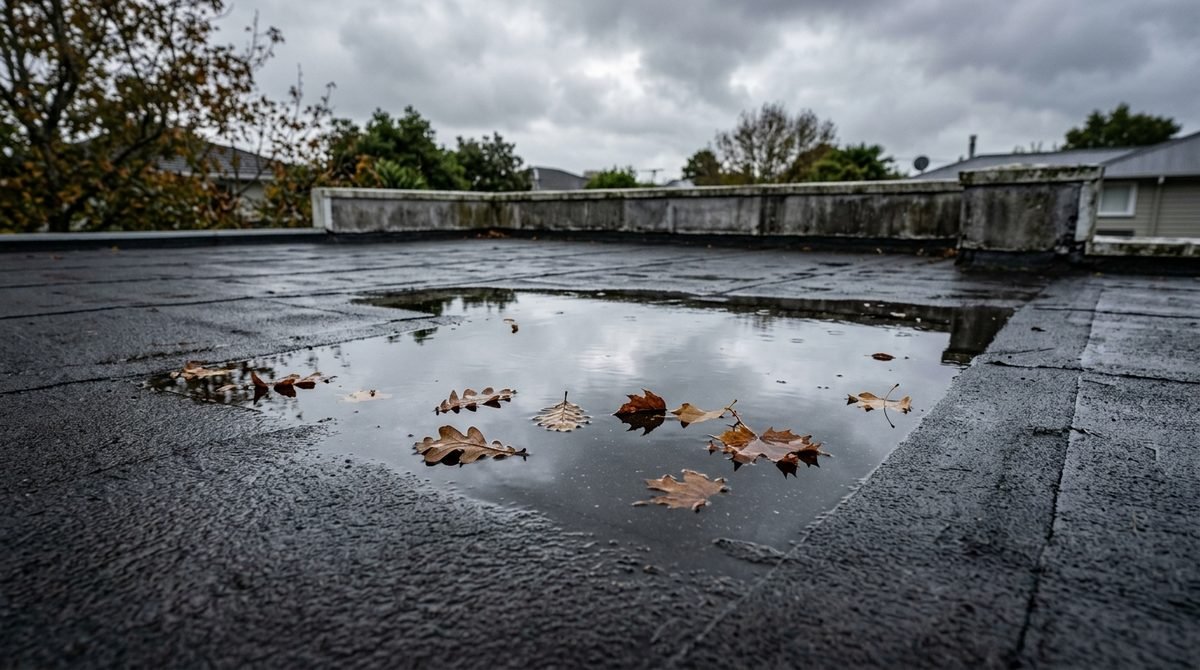
- Ponding. Water that cannot drain sits there until it evaporates. It is hard on every membrane, it collects grit that works like sandpaper underfoot, and in a Dunedin winter it freezes. Ponding usually means the fall was marginal to begin with, or the structure has settled.
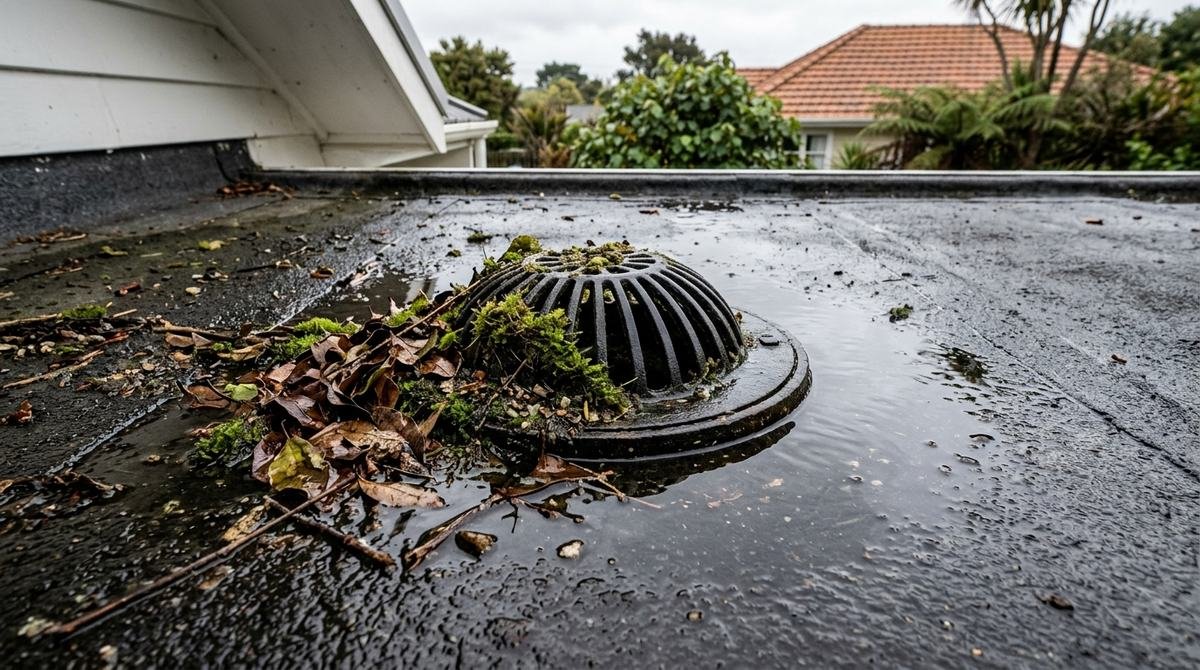
- Blocked outlets. A flat roof has one or two drains and no gutter to overflow into. Leaves, moss and tennis balls block them, the water backs up above the upstand, and it goes inside. This is the most preventable failure on the list.
- Upstands and wall junctions. Where the membrane turns up a wall and is capped by a flashing is the detail most likely to be rushed. If cladding was replaced and the flashing was not reinstated properly, water gets behind the membrane rather than on top of it.
- Foot traffic and fixings. Aerials, satellite dishes, air conditioning units and solar mounts all put holes or weight where the designer did not plan for it. Every penetration is a future leak unless it is detailed properly.
Moss and lichen make all of this worse by holding moisture against the surface and blocking outlets. The same problem on steel roofs is covered in our guide to removing roof moss.
Repair or Replace?
A membrane that has one puncture, a lifted seam or a failed outlet is usually worth repairing. Butynol in particular patches well, and a repair done early costs a fraction of a replacement.
Replacement starts to make sense when the membrane has hardened and lost flexibility, when seams are failing in more than one place, when the substrate underneath has gone soft, or when the roof has already been patched several times. Soft plywood is the decider: if water has been getting into the substrate, new membrane over old damage is money wasted, and the deck has to come up either way.
If a low-pitch section is leaking next to a steel roof that is also near the end of its life, it is usually worth doing both at once while the scaffolding is up. Our reroofing page covers what a full roof replacement involves.
Frequently Asked Questions
What is butynol?
Butynol is a butyl rubber membrane, usually 1 mm or 1.5 mm thick, glued to a plywood substrate and used on flat roofs, decks and internal gutters. E2/AS1 covers butyl rubber and EPDM membranes of at least 1 mm.
Is TPO better than butynol?
Neither is better across the board. TPO seams are heat-welded and testable, and the sheet is usually light coloured, which suits larger low-pitch roofs. Butynol is flexible, easy to patch, well proven on New Zealand decks, and sits inside E2/AS1. The right choice depends on the roof, not the brochure.
What is the minimum fall for a membrane roof in New Zealand?
E2/AS1 sets 2 degrees, or 1 in 30, for a membrane roof and 1.5 degrees, or 1 in 40, for a deck. BRANZ recommends building in more than the minimum, around 3 degrees, because structures settle over time. Some councils ask for greater falls again.
How long does a membrane roof last?
Manufacturers quote decades for both materials when they are installed and maintained properly. Real-world life depends far more on the details: whether water drains, whether outlets are kept clear, and how the upstands were finished. A well-drained membrane outlives a ponding one by years.
Can you put long-run steel on a flat roof instead?
Not below the minimum pitches. Corrugate needs 8 degrees and trapezoidal profiles such as 5-rib need 3 degrees under E2/AS1. Below that, water does not clear the laps and fixings fast enough, and the roof will leak no matter how well it is installed.
How do I stop my flat roof leaking?
Keep the outlets clear, clear leaves and moss before winter, keep foot traffic off it where you can, and get the upstands and flashings checked if cladding or joinery has been replaced. Most flat roof leaks start at a blocked drain or a rushed detail, not in the middle of the membrane.
Got a flat roof, deck or internal gutter that is leaking? Send us a few photos and we will tell you whether it is a repair or a replacement.