COLORSTEEL comes in 24 colours across four families, from light Titania to near-black Ironsand. For a Dunedin roof, the right choice comes down to how close you are to the sea, how much heat and glare the colour reflects, any council or subdivision rules, and how it looks on your house in real light.
- The Current COLORSTEEL Colour Range
- Popular COLORSTEEL Roof Colours
- Living Near the Sea: Choosing the Right Product
- Dark or Light: Heat and Glare
- Council and Subdivision Colour Rules in Dunedin
- How to Choose Your Roof Colour
- Looking After a COLORSTEEL Roof
- Why Choose Roof Craft Dunedin
- Frequently Asked Questions
- How many COLORSTEEL colours are there?
- What are the most popular COLORSTEEL roof colours?
- Is a dark roof hotter than a light roof?
- Which COLORSTEEL is best near the sea in Dunedin?
- Does roof colour affect the COLORSTEEL warranty?
- What is the difference between LRV and TSR?
- Can I change my roof colour when I reroof?
- What happened to COLORSTEEL Endura and Maxx?
Choosing a roof colour is one of the few decisions on a reroof that you will see every day for the next few decades. This guide covers the full COLORSTEEL range as it stands today, what the reflectance numbers actually mean, how Dunedin’s coast changes the product you need, and the rules that can limit your choice.
The Current COLORSTEEL Colour Range
COLORSTEEL is made and painted by New Zealand Steel at Glenbrook. The long-running COLORSTEEL Endura and Maxx products have been replaced by a single product, COLORSTEEL MAXAM, with COLORSTEEL ALTIMATE above it for the harshest coastal sites. The colour range is the same whichever product your roof needs.
There are 24 colours, grouped by the New Zealand landscapes they are drawn from. Each has two reflectance figures: Total Solar Reflectance (TSR), which tracks how hot the roof gets, and Light Reflectance Value (LRV), which tracks how bright it looks.
| Colour | Family | Shade | Total Solar Reflectance | Light Reflectance Value |
|---|---|---|---|---|
| StonePeak® Matte | Alpine | Light | 53% | 48% |
| Cloud | Alpine | Light | 69% | 74% |
| Sandstone Grey | Alpine | Mid | 41% | 27% |
| Grey Friars | Alpine | Dark | 26% | 10% |
| Thunder Grey | Alpine | Dark | 29% | 12% |
| Windsor Grey Low Gloss | Alpine | Dark | 20% | 7% |
| FlaxPod® Matte | Flora | Dark | 20% | 6% |
| TuiTuft® | Flora | Light | 66% | 68% |
| Mist Green | Flora | Mid | 39% | 25% |
| Permanent Green | Flora | Dark | 25% | 10% |
| FlaxPod® | Flora | Dark | 21% | 7% |
| Ebony | Flora | Dark | 5% | 5% |
| TidalDrift® Matte | Coast | Dark | 29% | 13% |
| Titania | Coast | Light | 66% | 68% |
| SandScape® | Coast | Light | 66% | 66% |
| Gull Grey | Coast | Light | 57% | 51% |
| SandBar® | Coast | Mid | 48% | 34% |
| New Denim Blue | Coast | Dark | 24% | 11% |
| Lichen | Terra | Mid | 42% | 28% |
| Pioneer Red | Terra | Dark | 35% | 12% |
| Scoria | Terra | Dark | 30% | 10% |
| Ironsand | Terra | Dark | 25% | 8% |
| Karaka | Terra | Dark | 24% | 8% |
| Slate | Terra | Dark | 25% | 9% |
Figures are from the COLORSTEEL colour chart. Shade is our grouping by LRV: light is 45% and above, mid is 20% to 44%, and dark is below 20%. Screens never show steel colours accurately, so always order a physical sample before deciding.
Popular COLORSTEEL Roof Colours
Going by what New Zealanders search for, a handful of colours account for most of the interest. Here is how they compare, and what each tends to suit.
- Sandstone Grey (LRV 27%): the most searched COLORSTEEL colour. A mid grey that sits comfortably on most house styles, from villas to new builds.
- FlaxPod (LRV 7%): named after harakeke seed pods. A very dark colour that gives a strong, modern look, also available in matte.
- Grey Friars (LRV 10%): a dark grey and a long-standing favourite for reroofs, less stark than the darkest shades.
- Gull Grey (LRV 51%): a light grey that reflects a lot of heat and suits lighter weatherboards.
- Thunder Grey (LRV 12%): a dark grey, close to Grey Friars in lightness.
- Titania (LRV 68%): a very light, off-white shade and one of the most reflective colours in the range, with a TSR of 66%.
- Karaka (LRV 8%): a deep green named after the karaka tree, which sits well against bush and trees.
- Ironsand and Slate (LRV 8% and 9%): very dark colours that read almost black from the street.
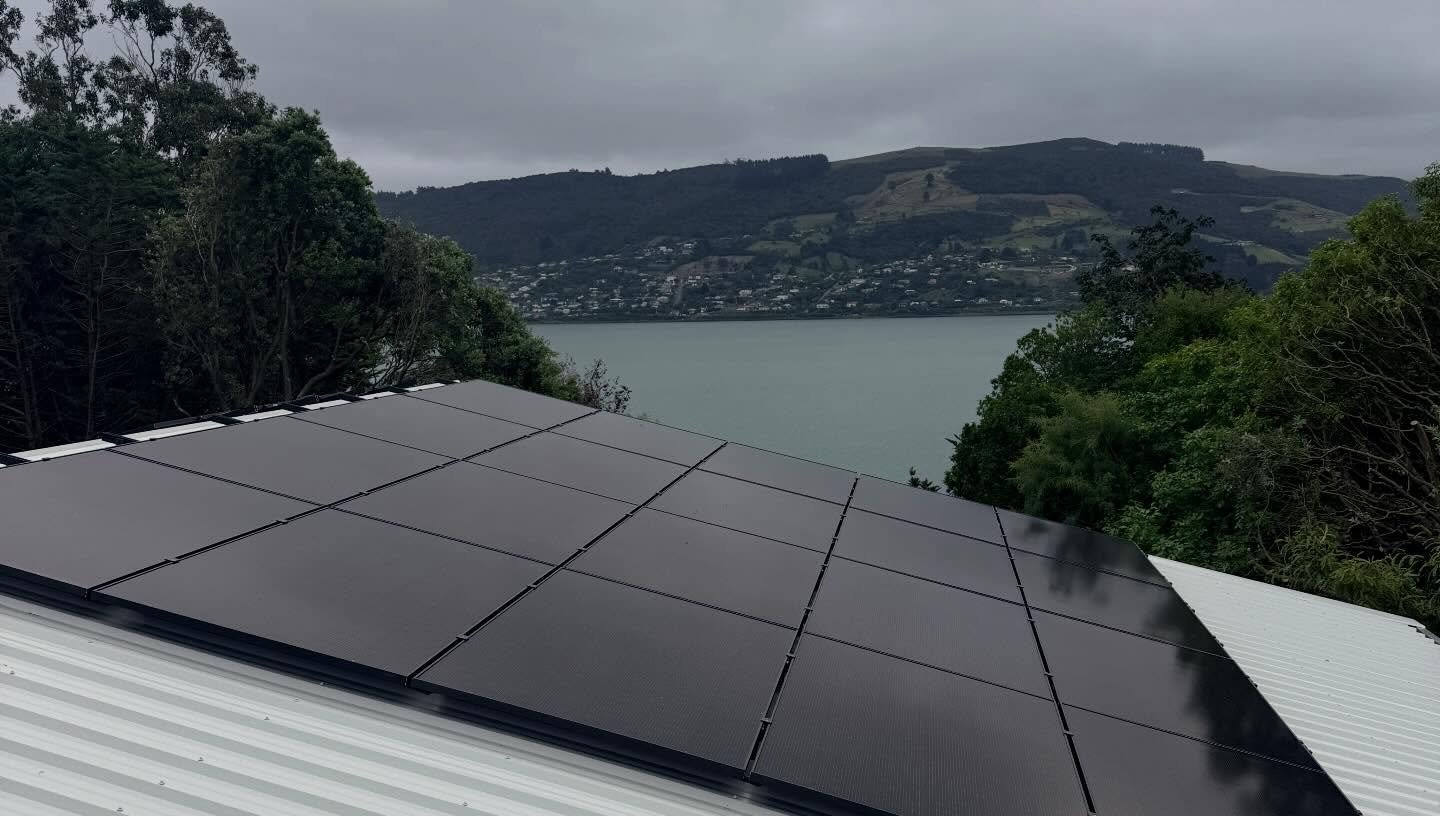
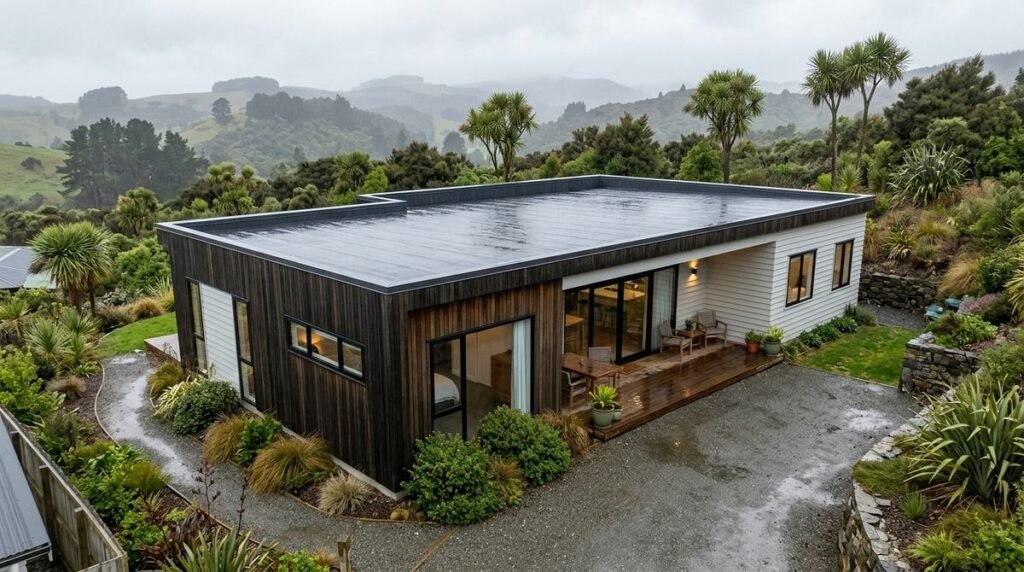
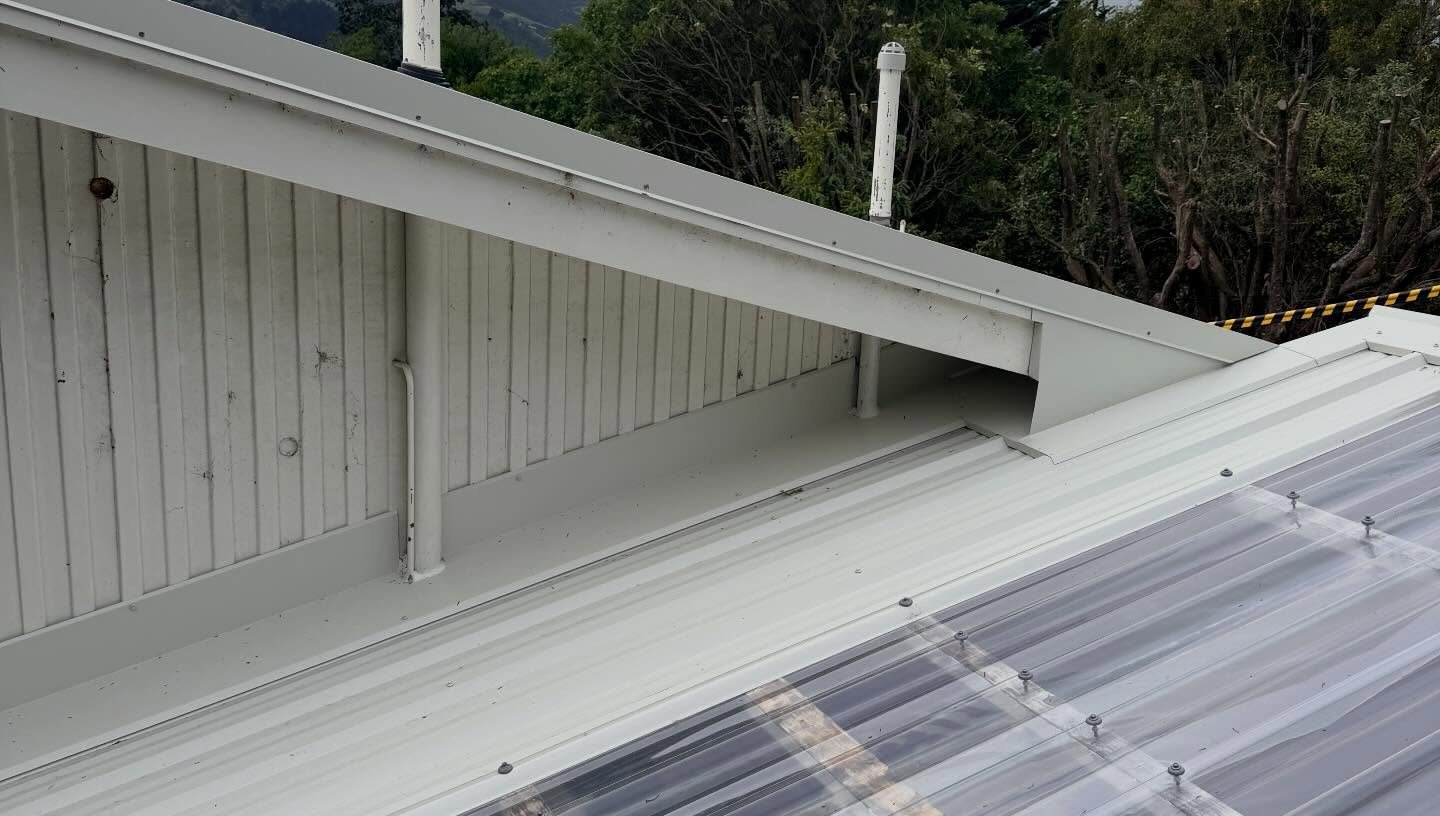
Titania is a good example of how different a colour looks on a whole roof compared with a small chip. On this Macandrew Bay home it reads as a soft off-white rather than bright white, and it keeps the roof space cooler than a dark colour would.
Living Near the Sea: Choosing the Right Product
Colour is only half the decision in Dunedin. How close you are to the sea decides which COLORSTEEL product your roof needs and how long the warranty runs, because airborne salt is the biggest cause of corrosion on steel roofing.
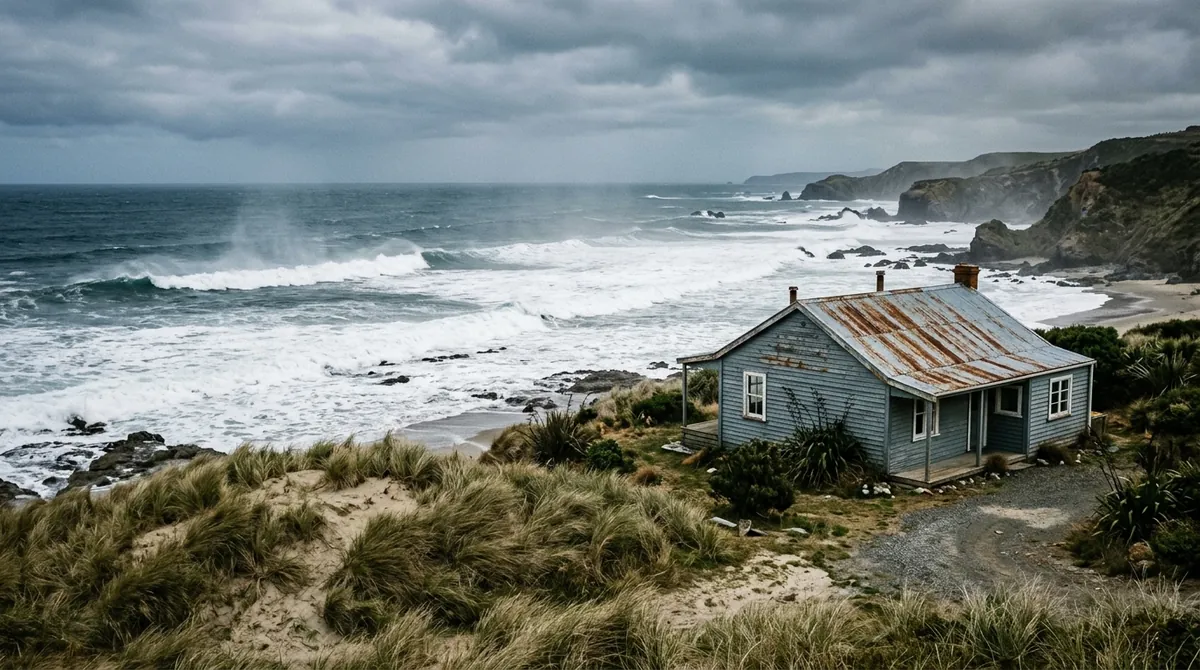
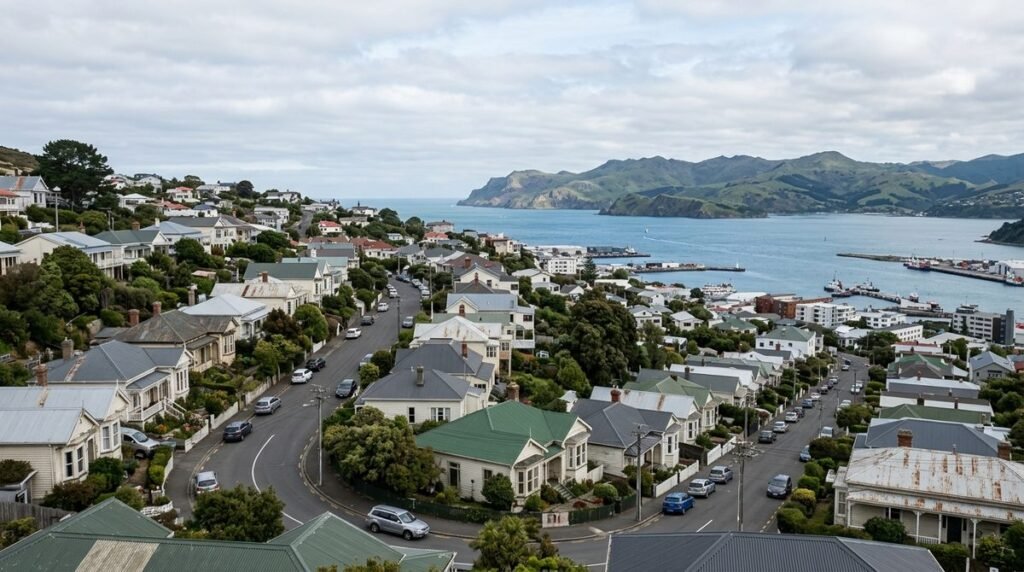
In Dunedin that means St Clair, St Kilda, Brighton and the open coast at Karitane and Waikouaiti take the heaviest salt load, while harbour-side suburbs such as Andersons Bay, Macandrew Bay, Portobello and Port Chalmers sit a category below, and the hill suburbs lower again. If an older quote or article mentions COLORSTEEL Endura or Maxx, those names have been retired: MAXAM replaced both, and ALTIMATE is the grade above it for the most exposed sites. New Zealand Steel sorts sites into five environmental categories. These are the east coast distances that apply in Dunedin, with the roofing warranties for each product. The two products are built differently. MAXAM is steel with New Zealand Steel’s ACTIVATE technology, an aluminium, zinc and magnesium metallic coating, and it covers most environments. ALTIMATE is not steel at all: it is a marine-grade aluminium substrate manufactured to AS/NZS 1734, which is why it carries a warranty in the extremely severe category where steel is not recommended. Aluminium does not rust the way steel does when the coating is damaged, so on a site that close to breaking surf the substrate matters more than the paint.
| Environment | Typical distance from breaking surf | MAXAM roofing warranty (perforation / paint) | ALTIMATE roofing warranty (perforation / paint) |
|---|---|---|---|
| Mild | More than 5 km | 50 years / 18 years | 50 years / 18 years |
| Moderate | 500 m to 5 km | 40 years / 18 years | 40 years / 18 years |
| Severe | 100 m to 500 m, or right beside calm saltwater such as a harbour foreshore | 30 years / 15 years | 30 years / 15 years |
| Very severe | 25 m to 100 m | 20 years / 15 years | 30 years / 15 years |
| Extremely severe | 0 m to 25 m from the high-water mark | Not recommended | 25 years / 15 years |
Source: New Zealand Steel Environmental Categories & Warranty Guide, May 2026. Wall cladding and accessories such as spouting, downpipes and fascia carry shorter warranties than roofing.
In Dunedin terms, most hill suburbs well back from the water fall into the mild or moderate categories. Homes right on the Otago Harbour foreshore, around Macandrew Bay, Portobello and Port Chalmers, can fall into severe. Beachfront streets at St Clair and St Kilda, and coastal towns such as Karitane, Warrington and Moeraki, can range from severe to extremely severe depending on how close they are to the surf. Prevailing winds can push salt further inland, and New Zealand Steel asks to confirm the warranty for anything within 100 metres of saltwater, so your roofer should check your exact site before ordering.
Dark or Light: Heat and Glare
Dark colours absorb more of the sun’s energy, so the roof itself runs hotter. COLORSTEEL’s guidance, consistent with industry roof-temperature data, gives these approximate roof temperatures for a hot New Zealand summer day.
| Roof type | Approximate roof temperature |
|---|---|
| Insulated, dark colour | 80°C |
| Uninsulated, dark colour | 65°C |
| Insulated, light colour | 60°C |
| Uninsulated, light colour | 50°C |
COLORSTEEL uses infrared-reflective pigments in many of its colours. New Zealand Steel says these can lower roof temperatures by up to 8°C on darker colours, which is why two colours that look equally dark can have different TSR figures. In winter the effect is small, so a lighter roof will not make a well-insulated house noticeably colder.
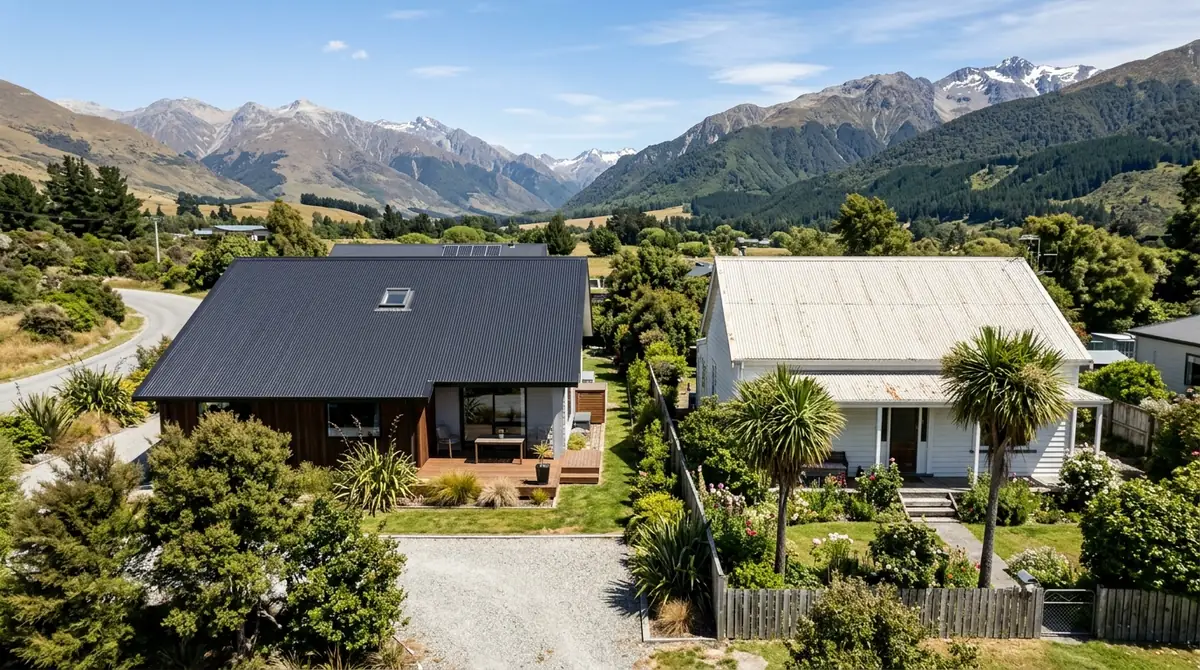
In Dunedin, heat is rarely the deciding factor it is further north, but it still matters for rooms directly under the roof, skillion ceilings and homes without much roof insulation. Glare is the other consideration: very light colours with a high LRV can be bright when seen from hillside neighbours above you, which is exactly what reflectivity rules are designed to control.
Council and Subdivision Colour Rules in Dunedin
Before you fall in love with a colour, check whether any rules apply to your property.
- Dunedin’s district plan (2GP) applies a reflectivity standard to buildings in landscape and coastal character overlay zones, measured using Light Reflectance Value. Your property’s zoning and overlays are shown on the Dunedin City Council 2GP maps.
- Subdivision covenants can be stricter. For example, the Flagstaff design guidelines require sheet metal roofing to have a maximum reflectivity of 25%, and other claddings a maximum of 36%.
Where a 25% limit applies, the COLORSTEEL colours with an LRV of 25% or lower are Grey Friars, Thunder Grey, Windsor Grey Low Gloss, FlaxPod® Matte, Mist Green, Permanent Green, FlaxPod®, Ebony, TidalDrift® Matte, New Denim Blue, Pioneer Red, Scoria, Ironsand, Karaka and Slate. Popular Sandstone Grey sits just above that limit at 27%.
How to Choose Your Roof Colour
The best roof colour is the one that still looks right in ten years, on your house, in Dunedin’s light. These steps help avoid the most common regrets.
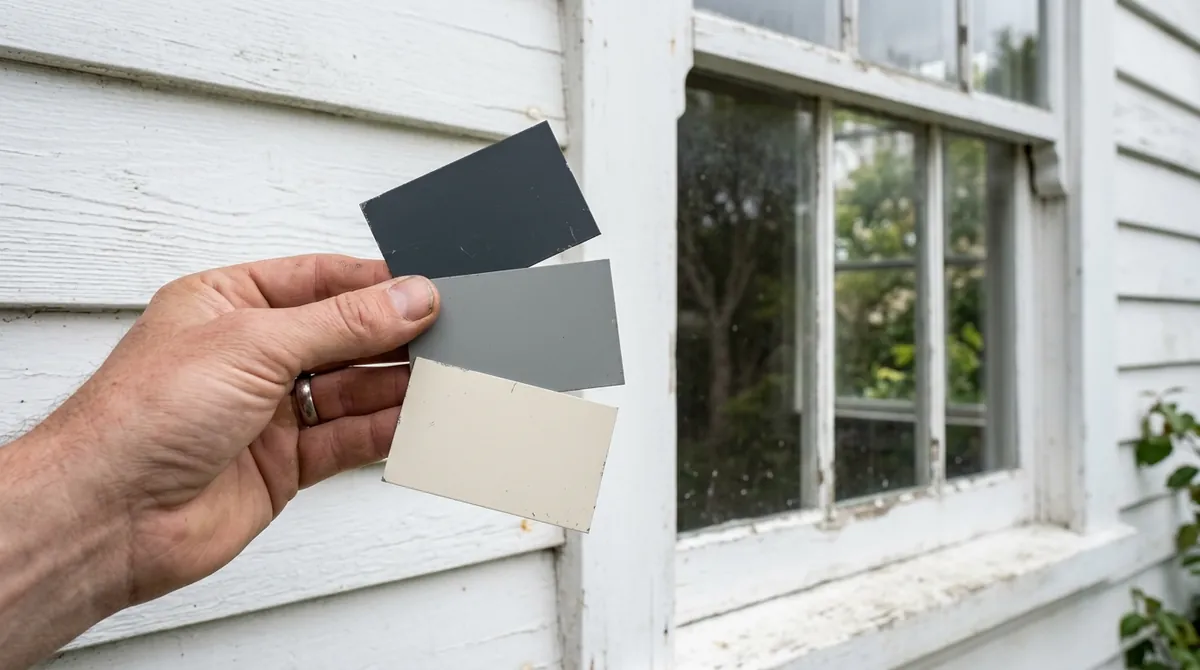
- Order physical samples. Steel colours look different on screen and in print. COLORSTEEL offers free colour samples.
- Look at them outside, more than once. Check samples on a bright day and on a grey Dunedin day, in the morning and late afternoon. Colours shift a lot between the two.
- Match the house, not the chip. Hold samples against your weatherboards, window joinery and front door. The roof, spouting and fascia are seen together.
- Stand back. A large roof reads lighter than a small chip. Look at finished roofs in your street, or at project photos, to see the colour at full scale.
- Decide on spouting and trim. Matching spouting and fascia to the roof gives a clean look; a contrasting trim picks out the roofline. Both are available in COLORSTEEL colours.
- Check the rules and your site. Confirm any district plan overlay or covenant, and your environmental category, before ordering.
Looking After a COLORSTEEL Roof
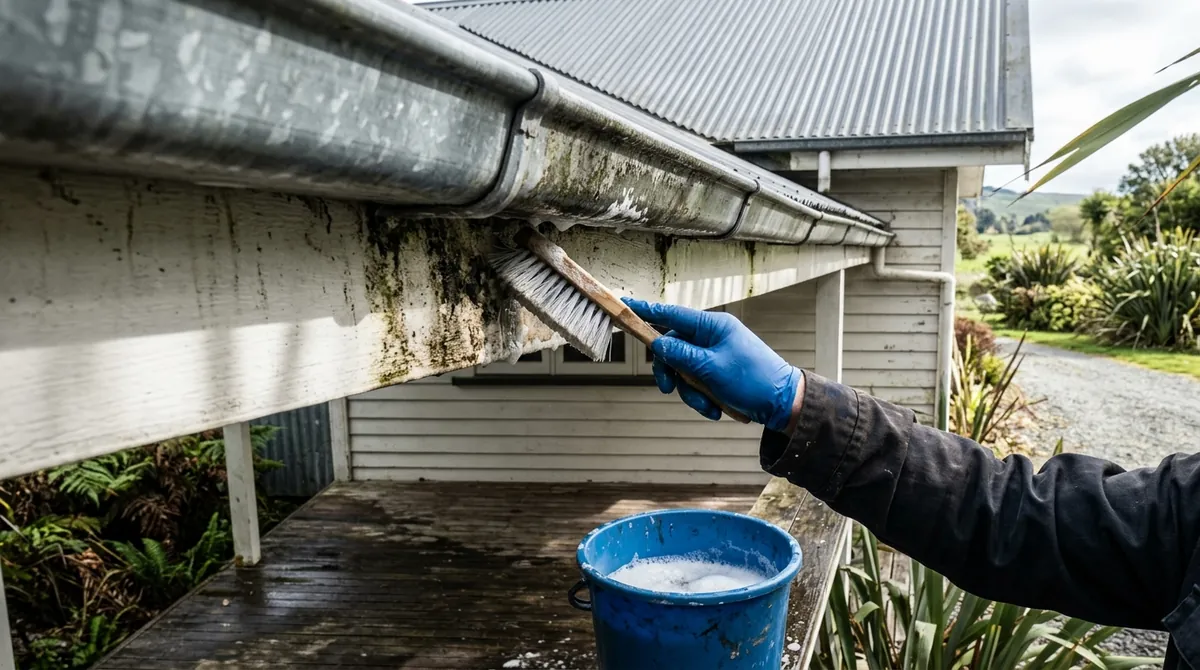
Rain does most of the work on a steel roof by washing salt and dirt away. The areas rain does not reach need a manual wash to keep the paint and warranty in good shape. New Zealand Steel calls these unwashed areas, and they include soffits, the undersides of spouting, fascias, sheltered corners and anything fixed to the roof such as flues, aerials and solar panels.
- Wash with clean water and a sponge or a soft nylon-bristled brush.
- If you use a water blaster, keep it to no more than 2,900 psi.
- Wash more often the closer you are to the sea. In the most exposed categories, New Zealand Steel recommends washing wall cladding every three months and spouting and fascia every month.
- Keep spouting clear, because standing water and debris shorten its life.
Why Choose Roof Craft Dunedin
Roof Craft Dunedin is a locally owned roofing company led by a Licensed Building Practitioner who has worked on Dunedin roofs since 2013. We use heavy gauge Colorsteel as standard on our reroofs, and we can check your environmental category and any colour rules with you before anything is ordered. If you are still deciding, see how roof pitch affects which profiles you can use, or find out more about our team.
What Sets Us Apart
- Licensed and local: a Licensed Building Practitioner who knows Dunedin’s hill suburbs, harbour and coast.
- The right product for your site: MAXAM or ALTIMATE matched to how exposed your home is to salt.
- Backed up: every roof we fit comes with a 10-year workmanship guarantee and a material warranty certificate.
Frequently Asked Questions
How many COLORSTEEL colours are there?
The current COLORSTEEL range has 24 colours in four families: Alpine, Flora, Coast and Terra. That includes three matte finishes, StonePeak, FlaxPod and TidalDrift, and Windsor Grey in a low gloss finish. New Zealand Steel recommends ordering a physical sample before choosing, because screens do not show colours accurately.
What are the most popular COLORSTEEL roof colours?
Going by what New Zealanders search for, Sandstone Grey, FlaxPod, Grey Friars and Gull Grey attract the most interest, followed by Thunder Grey, Titania and Karaka. Popular is a good starting point, but the right colour for your roof also depends on your house, your site and any council or subdivision rules.
Is a dark roof hotter than a light roof?
Yes. COLORSTEEL’s guidance puts an insulated dark metal roof at around 80°C on a hot summer day, against about 60°C for a light colour. COLORSTEEL’s infrared-reflective pigments reduce this for many darker colours by up to 8°C. In Dunedin’s generally cooler climate, roof temperature is usually less of a constraint than in hotter parts of New Zealand.
Which COLORSTEEL is best near the sea in Dunedin?
COLORSTEEL MAXAM covers everything from mild inland sites to very severe coastal ones. For the most exposed sites, within 25 metres of the high-water mark on an exposed east coast site, or in other extremely severe marine or breaking-surf environments, New Zealand Steel recommends COLORSTEEL ALTIMATE. Your roofer should confirm your environmental category.
Does roof colour affect the COLORSTEEL warranty?
In New Zealand Steel’s warranty guide, the warranty period is set by the product, your environmental category and whether the steel is roofing, wall cladding or accessories, not by colour. Keeping to the recommended washing for unwashed areas is part of keeping the warranty. Check your own warranty certificate for the exact terms.
What is the difference between LRV and TSR?
Light Reflectance Value (LRV) measures how much visible light a colour reflects, so it describes how bright it looks and is what councils use for glare rules. Total Solar Reflectance (TSR) measures how much of the sun’s full energy is reflected, so it is the better guide to how hot the roof gets.
Can I change my roof colour when I reroof?
Yes. A reroof is the natural time to change colour, since every sheet is being replaced. Before you choose, check whether your property is in a Dunedin district plan landscape or coastal character overlay, or has a subdivision covenant, because either can limit your colour choice, including how dark or how reflective the new roof can be.
What happened to COLORSTEEL Endura and Maxx?
New Zealand Steel replaced COLORSTEEL Endura and Maxx with a single product, COLORSTEEL MAXAM. Neither Endura nor Maxx is sold any more, so a quote naming them is working from old information. MAXAM uses New Zealand Steel’s ACTIVATE technology, an aluminium, zinc and magnesium (AM) metallic coating, and carries longer corrosion warranties than Endura did across every environment. COLORSTEEL ALTIMATE, sometimes written as Altimate, sits above MAXAM for the most exposed coastal sites, and on the Dunedin coast it is the only product New Zealand Steel recommends within 25 metres of breaking surf.

Josh Whelan
Josh Whelan is a Licensed Building Practitioner (BP166400) and the owner of Roof Craft Dunedin. He has been roofing Dunedin homes since 2013 and still quotes every job himself.