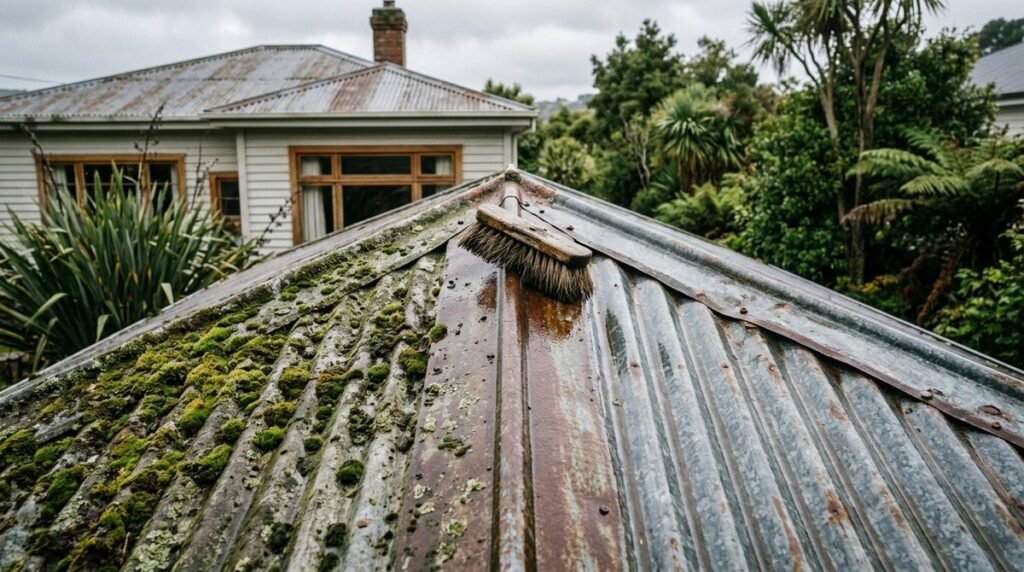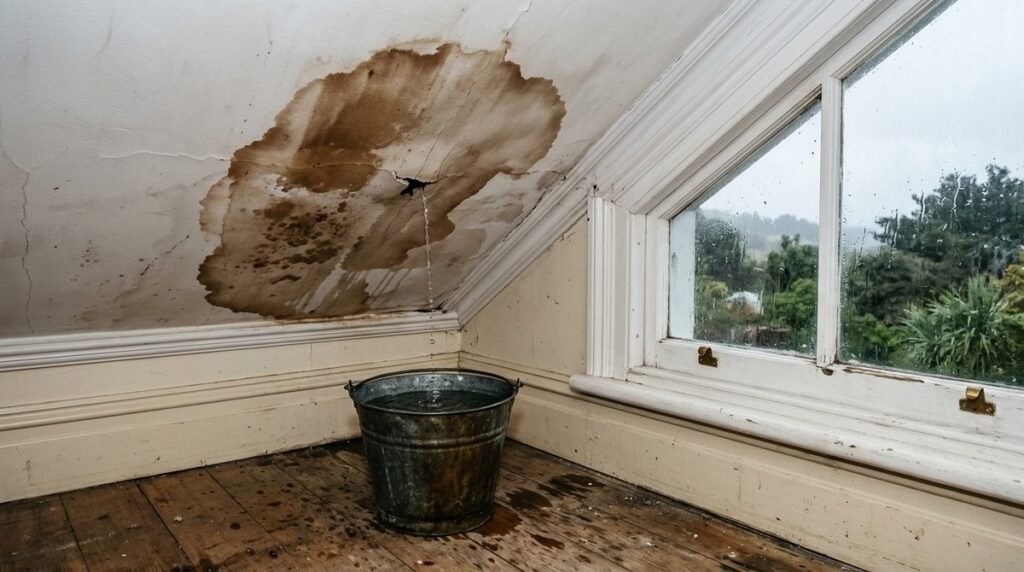
Most roof leaks in older Dunedin homes come from a handful of places: worn flashings around chimneys, walls and skylights, rusted or loose roofing iron and nails, cracked or slipped tiles, blocked spouting and internal gutters, and failed membranes on flat roofs. Some leaks are not leaks at all, but condensation dripping from under an unlined iron roof.
- Signs Your Roof Is Leaking
- The Most Common Causes of Roof Leaks
- Is It a Leak or Condensation?
- What to Do Straight Away
- How Roofers Find a Leak
- Repair or Reroof?
- Why Choose Roof Craft Dunedin
- Frequently Asked Questions
A leak is stressful because water rarely shows up where it gets in. It can travel along a rafter or the top of the ceiling before it drips, so the stain is often metres away from the actual problem. This guide covers the signs to look for, the most common causes on older Dunedin roofs, what to do straight away and how to decide between a repair and a new roof.
Signs Your Roof Is Leaking
Some leaks are obvious. Others show up slowly, so it is worth knowing the quieter signs too.
- Brown or yellow stains on ceilings, or around light fittings and cornices
- Paint bubbling or peeling on ceilings and the tops of walls
- A musty smell or mould in a particular room or cupboard
- Damp or stained insulation, timber or building paper in the roof space
- Daylight visible through the roof from inside the roof space
- A ceiling that has started to sag, which needs attention straight away
The Most Common Causes of Roof Leaks
Most leaks on older Dunedin roofs come down to the same few causes. The table below is a quick guide, and each cause is explained underneath.
| Cause | Where to look | Typical signs | Usual fix |
|---|---|---|---|
| Worn or failed flashings | Chimneys, walls, skylights, valleys and where roof levels meet | Stains near chimneys or walls, rust or gaps at the flashing | Replace or refit the flashing |
| Rusted roofing iron | Sheet laps, around fixings and lower parts of the roof | Rust streaks, pinholes, daylight in the roof space | Replace affected sheets, or reroof if widespread |
| Loose nails and fixings | Older nailed iron roofs, especially on exposed sides | Lifted nail heads, rattling sheets in wind | Refix with modern roofing screws and washers |
| Cracked or slipped tiles | Concrete and clay tile roofs, ridges and hips | Visible gaps, broken tiles in the spouting | Replace tiles and repoint ridges |
| Blocked spouting and internal gutters | Spouting, internal gutters and downpipes | Overflowing spouting, water inside walls or ceilings near the edge | Clear and repair, or replace undersized spouting |
| Failed membrane or butynol | Flat roofs, decks and box gutters | Bubbling, splits or ponding water on the membrane | Repair the membrane, or replace it |
| Penetrations | Flues, vents, aerials and solar panel mounts | Stains below a fitting on the roof | Reseal or re-flash around the fitting |
Worn or Failed Flashings
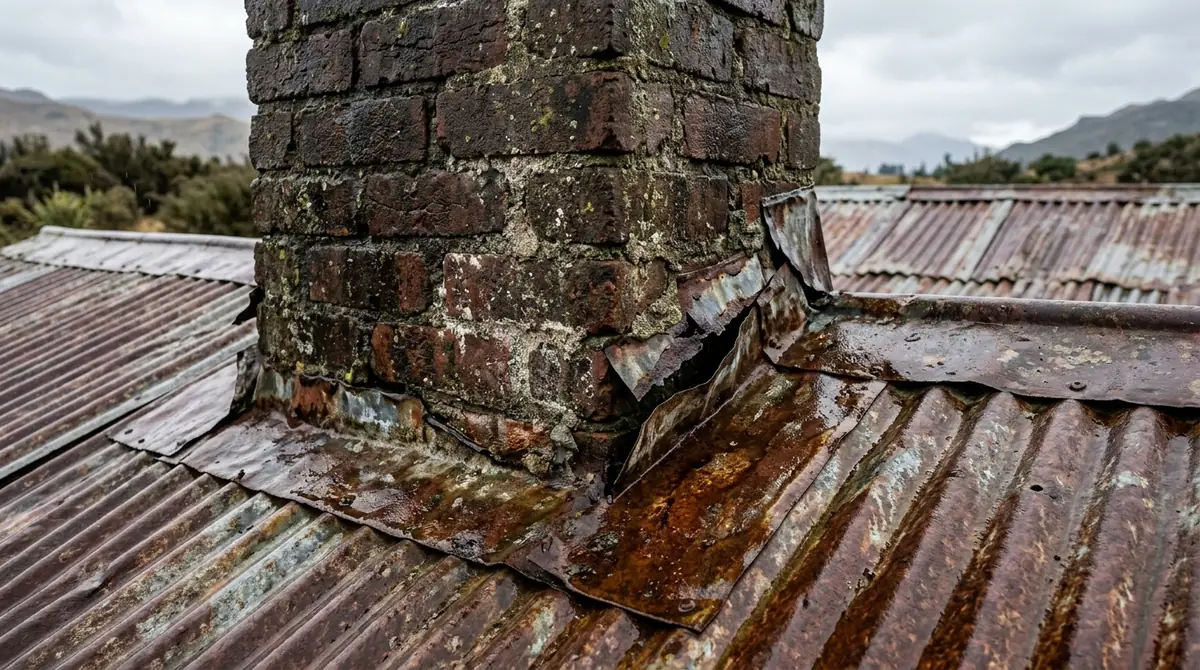
Flashings are the folded metal pieces that seal the joins where a roof meets something else, such as a chimney, a wall, a skylight or another roof. On older homes they are the most common leak point, because they rust, lift in the wind or were sealed with material that has perished. Old brick chimneys are a frequent culprit, as the chimney and roof move differently over time.
Rusted Roofing Iron and Loose Nails
Many older Dunedin houses still have their original corrugated iron. Rust usually starts where water sits longest: along the laps where sheets overlap and around the nails. Older roofs were fixed with nails, which gradually work loose as the iron expands and contracts, leaving holes that let water in. Wind lifts loose sheets further.
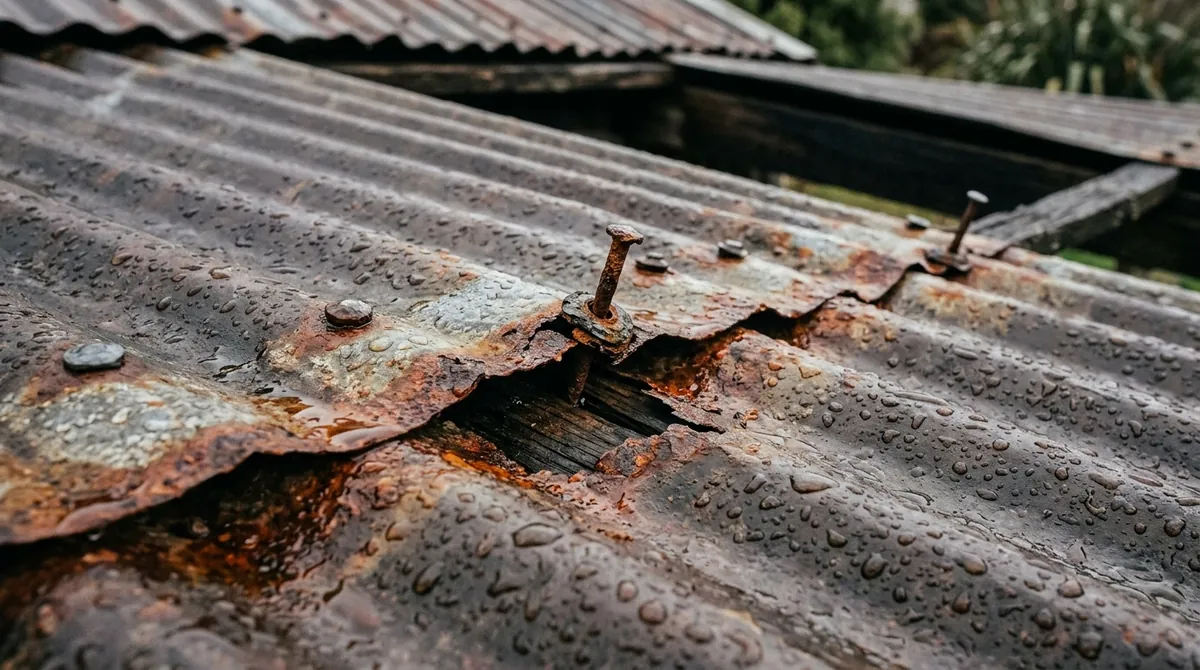
A few loose nails can be replaced with roofing screws, and a small rusted area can sometimes be patched or have sheets replaced. Once rust is widespread, patching just moves the leak somewhere else.
Cracked or Slipped Tiles
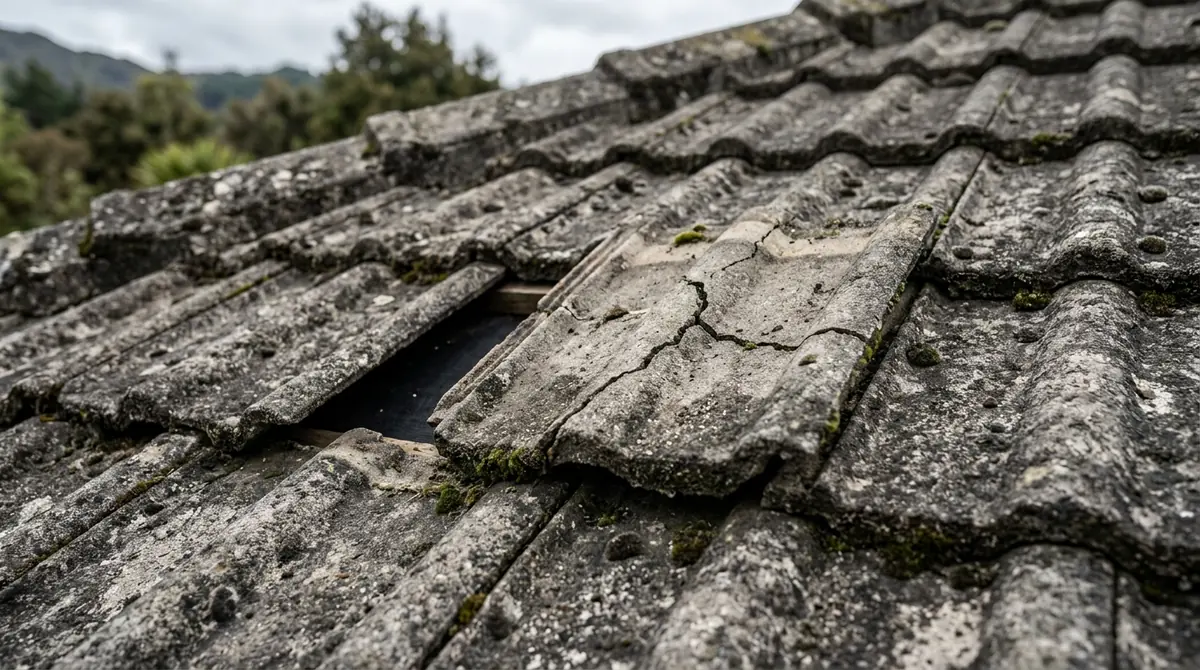
Concrete and clay tiles crack from age, frost, falling branches or being walked on. Tiles can also slip out of place, and the mortar along ridges and hips breaks down over time. Even one cracked tile can let a surprising amount of water through in wind-driven rain.
Blocked Spouting and Internal Gutters
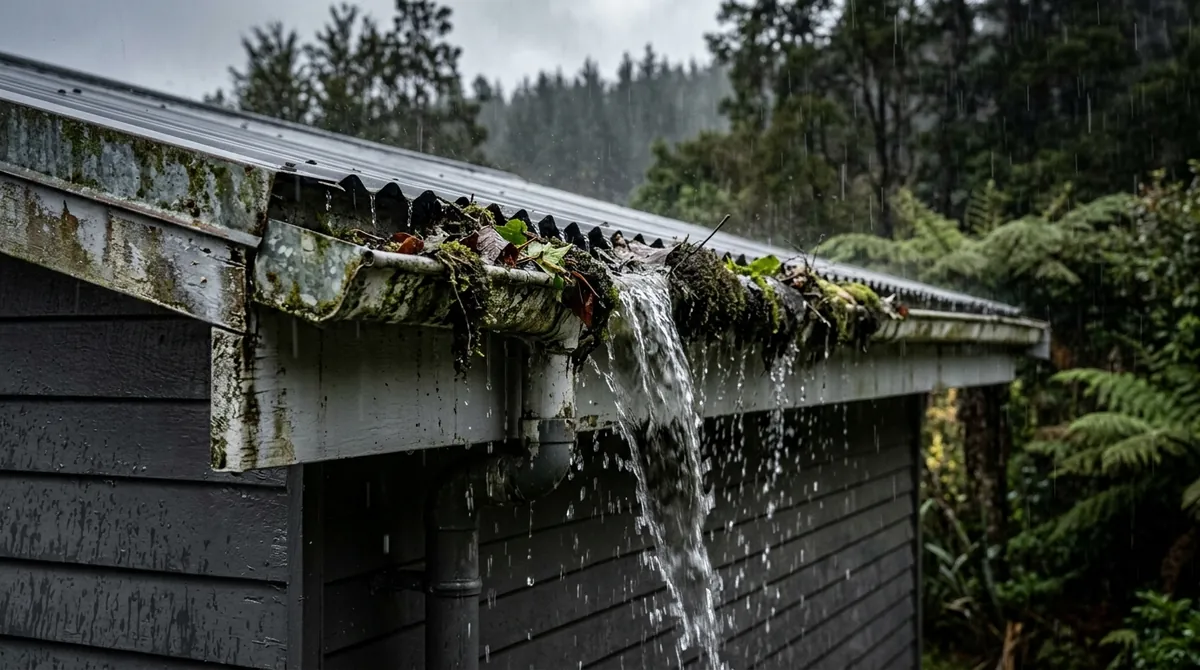
When spouting fills with leaves and moss, water backs up and overflows. On houses with internal gutters or box gutters, the overflow can run straight inside the walls or ceiling. Dunedin roofs near trees are especially prone to this, and heavy moss on the roof adds to the problem. Our guide to removing roof moss covers how to keep that under control.
Failed Membranes on Flat Roofs
Flat and low-pitch roofs, decks and box gutters are usually covered with a membrane, often butynol on older homes. Over time membranes split at joins, bubble or shrink, and water that ponds on a flat roof finds any weakness. Membrane leaks are often hard to trace because water travels a long way underneath before it shows.
Flues, Vents and Solar Mounts
Every hole through a roof is a potential leak. Flues, vents, aerials and the mounts for solar panels all need a proper flashing or seal, and sealant around them ages and cracks. Leaks sometimes start after new fittings are added to an existing roof without the right flashing.
Is It a Leak or Condensation?
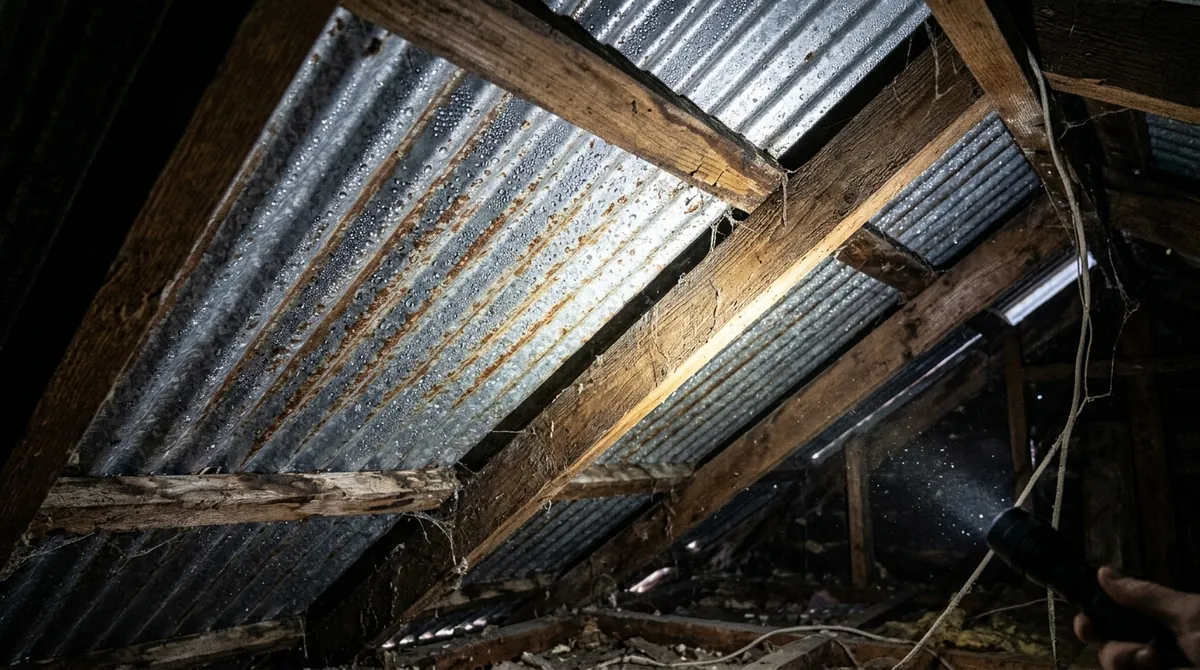
In Dunedin’s cold winters, condensation is often mistaken for a roof leak. Warm, moist air from inside the house rises into the roof space and meets the cold underside of the roofing, where it condenses and drips. It is most common under older iron roofs that have no underlay beneath the sheets.
| Clue | Roof leak | Condensation |
|---|---|---|
| When it happens | During or soon after rain, worse in wind | Cold, clear mornings, even when it has not rained |
| Where it shows | One or a few spots, often near chimneys, walls or valleys | Spread across the underside of the roof |
| In the roof space | Water tracks, rust or staining from a specific point | Droplets across the underside of the sheets |
| Usual fix | Repair the roof where water gets in | Reduce indoor moisture, ventilate, add underlay when reroofing |
What to Do Straight Away
If water is coming in now, these steps limit the damage while you arrange a repair.
- Catch the water. Put a bucket or container under the drip and move furniture, rugs and electronics out of the way.
- Keep water away from electrics. If water is near light fittings or switches, turn off the power to that circuit at the switchboard and call an electrician.
- Relieve a bulging ceiling carefully. If the ceiling is sagging with water, keep people clear. A roofer or builder can advise whether to drain it.
- Record the damage. Take photos of the ceiling, the roof space and anything damaged, and note the date and weather for your insurer.
- Stay off the roof. Wet roofs are dangerous, especially steep or mossy ones. Leave temporary covers to a roofer with the right safety gear.
- Call a roofer. Describe when the leak happens and where it shows. That information helps find the cause faster.
How Roofers Find a Leak
Because water travels before it drips, finding a leak is detective work rather than guesswork. A roofer will usually start in the roof space, looking for water tracks, rust and stained timber and following them uphill to where water gets in. On the roof they check flashings, laps, fixings and penetrations above that point. For hard-to-find leaks, a section of roof can be wetted with a hose, starting low and working up, while someone watches from inside.
Repair or Reroof?
Many leaks are a straightforward repair. Others are a sign the whole roof is near the end of its life. This table shows where the line usually falls.
| Situation | Usually a repair | Usually time to reroof |
|---|---|---|
| One failed flashing | Yes | No |
| A few loose nails or fixings | Yes | No |
| One or two cracked tiles | Yes | No |
| Rust holes along many laps | No | Yes |
| Leaks in several different places | Sometimes | Often |
| Tiles crumbling across the roof | No | Yes |
| Roof leaks again soon after a repair | Rarely | Often |
If your roof is due for replacement, it is also a chance to add a roofing underlay, fix old condensation problems and choose a new colour. Our guide to COLORSTEEL colours for Dunedin roofs is a good place to start.
Why Choose Roof Craft Dunedin
Roof Craft Dunedin fixes leaks and replaces roofs across Dunedin and the wider Otago coast. The same Licensed Building Practitioner who inspects your roof tells you what he finds, including anything that can wait, so you are not sold a new roof when a repair will do. Find out more about our team.
What Sets Us Apart
- Honest advice: a straight answer on whether your roof needs a repair or a reroof.
- Hard-to-reach roofs: our crew is harness and abseil trained for steep and high-access work.
- Backed up: every roof we fit comes with a 10-year workmanship guarantee.
Frequently Asked Questions
Why does my roof only leak in heavy rain?
Leaks that only show up in heavy or wind-driven rain usually come from water being pushed sideways under flashings or sheet laps, or from spouting and internal gutters overflowing faster than they can drain. A small gap that copes with light rain can let water in once the wind drives it uphill.
Why is my ceiling wet when it hasn’t rained?
If the ceiling is wet on a dry day, the cause is usually condensation, a plumbing leak or a hot water cylinder or header tank in the ceiling space. Condensation forms under cold, unlined iron roofs overnight and drips down in the morning. Check the roof space on a cold, still morning to tell the difference.
Can a roof leak be fixed from inside?
Only temporarily. You can catch water and protect belongings from inside, but a lasting fix has to be made on the roof, where the water gets in. Sealant applied from underneath rarely holds, because water keeps finding the same way through the outer layer.
How urgent is a roof leak?
Treat it as urgent. Even a slow leak soaks insulation and timber, which leads to rot, mould and ceiling damage, and water near light fittings or wiring is a safety risk. A leak is almost always cheaper to fix early than after it has damaged the structure underneath.
Does home insurance cover roof leaks?
It depends on your policy and the cause. Many New Zealand policies cover sudden damage, such as a storm lifting roofing, but exclude gradual damage from wear and tear or poor maintenance. Photograph the damage, note the date and talk to your insurer early.
How do I stop condensation dripping from my iron roof?
Reduce moisture getting into the roof space by using extractor fans in kitchens and bathrooms, and make sure the roof space is ventilated. When a roof is replaced, a roofing underlay under the new sheets catches condensation and directs it to the spouting, which is the most effective long-term fix.
Can moss cause a roof leak?
Yes. Heavy moss holds water against the roof, lifts tiles and washes into spouting, where it causes blockages and overflows. Removing it gently and keeping it from coming back reduces the risk. See our guide to removing roof moss from an older house.

Josh Whelan
Josh Whelan is a Licensed Building Practitioner (BP166400) and the owner of Roof Craft Dunedin. He has been roofing Dunedin homes since 2013 and still quotes every job himself.